
Our services
Audiometric Testing & Hearing Conservation
Audiometric testing, follow-up assessments and hearing conservation awareness for employees exposed to workplace noise.
Overview
Noise-induced hearing loss is permanent but preventable. A hearing conservation programme combines noise control, hearing protection, training and audiometric testing to protect employees’ hearing. Audiometric testing tracks each employee’s hearing over time, so that changes are identified early and acted on before they become significant.
Regulatory context
The Occupational Safety and Health (Noise Exposure) Regulations 2019 set out employer duties for managing noise at work, including audiometric testing for employees whose noise exposure reaches the levels specified in the regulations. Please refer to the regulations and your noise risk assessment for the requirements that apply to your workplace.
General information only, not legal advice. Please confirm the specific obligations that apply to your workplace.
Who needs this service
- Employers whose noise risk assessment identifies employees exposed to high noise levels
- Workplaces establishing or reviewing a hearing conservation programme
- New employees joining noise-exposed roles who need a baseline hearing test
- Employees whose previous results show a change in hearing that needs follow-up
Scope of service
- Baseline audiometric tests for employees entering noise-exposed roles
- Periodic audiometric tests to monitor hearing over time
- Testing in a sound-attenuating booth to support reliable results
- Comparison of results with each employee’s baseline audiogram
- Confirmatory retesting where a significant change in hearing is found
- Recommendations for follow-up, which may include medical evaluation and a review of noise exposure and hearing protection
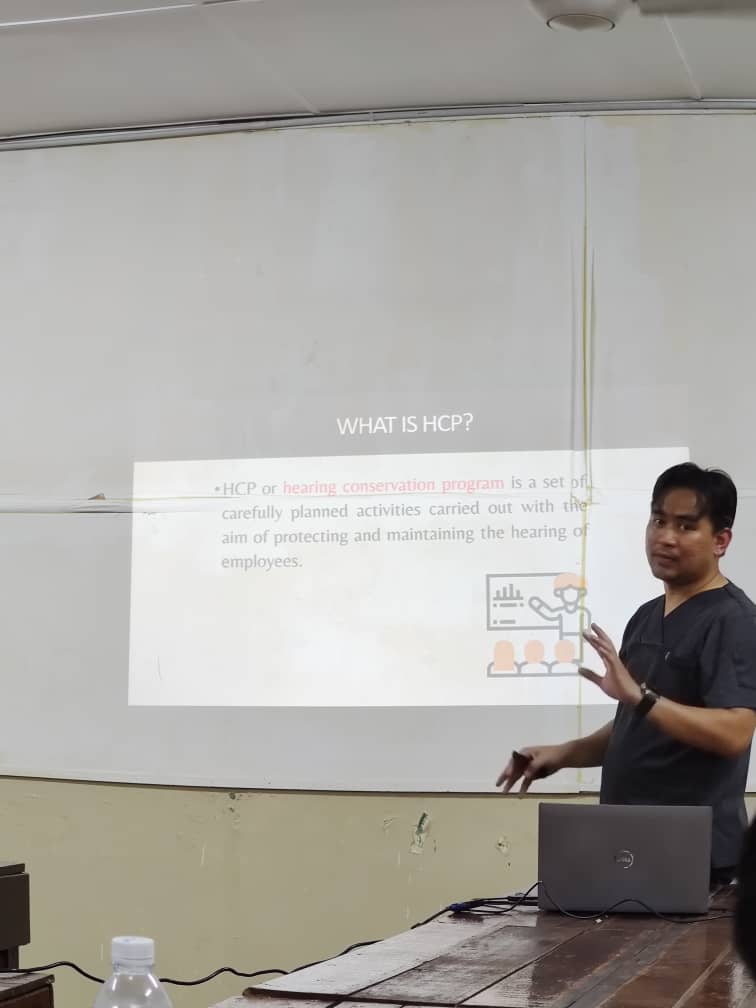
- Hearing conservation awareness talks for employees
- Individual results for employees and summary reporting for the employer
The exact scope, schedule and reporting are confirmed with you during the quotation process.
Typical process
- 01
Plan
We confirm the employees to be tested, using your noise risk assessment and records.
- 02
Test
Hearing tests are carried out in a sound-attenuating booth.
- 03
Compare
Results are compared with each employee’s baseline to identify changes.
- 04
Follow up
Employees with significant changes are retested and referred for follow-up as needed.
- 05
Report
You receive a summary with recommendations for your hearing conservation programme.
Benefits for employers
Early warning
Detects hearing changes early, while preventive action can still make a difference.
Programme feedback
Results show whether noise controls and hearing protection are working.
Supports your duties
Helps you meet audiometric testing duties under the Noise Exposure Regulations 2019.
Informed employees
Awareness talks help employees understand why hearing protection matters.
From our work
View project gallery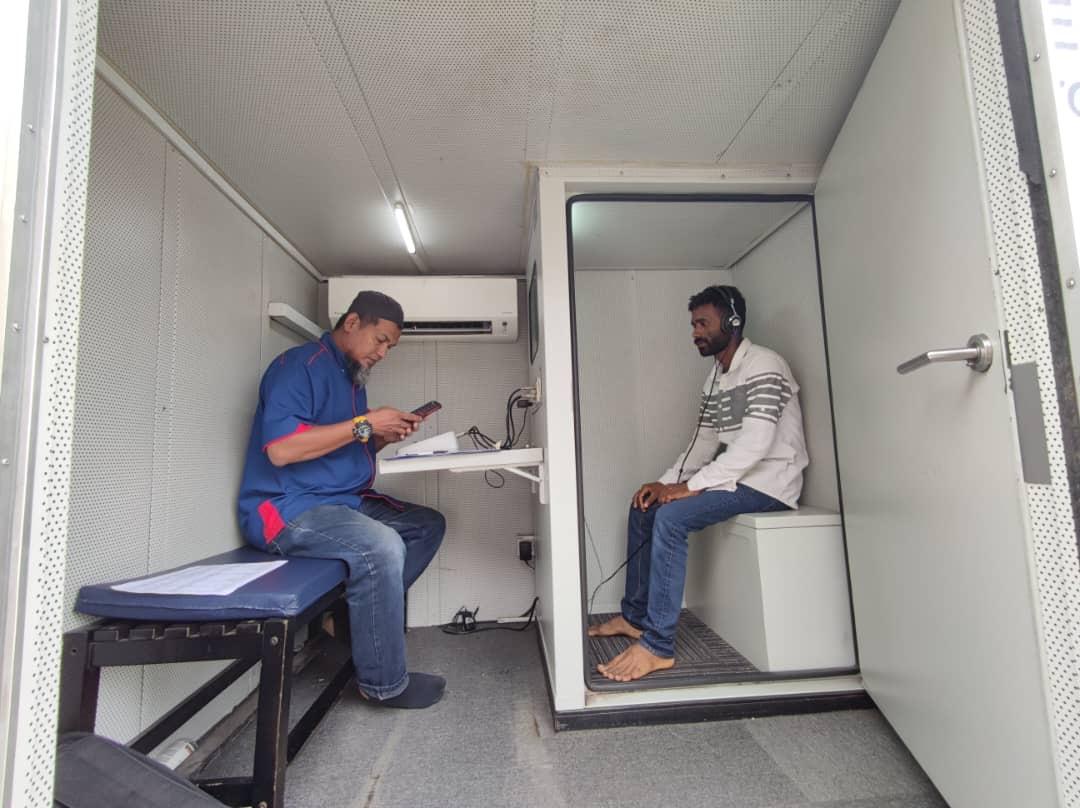
Relevant industries
All industriesManufacturing
Machinery, presses and production lines.
Oil & Gas
Compressors, turbines and process plant.
Plantation
Mills, machinery and powered field equipment.
Employee health information is handled confidentially. Employers receive fitness outcomes and summary information relevant to work; individual clinical details remain with the employee.
Discuss your audiometric testing requirements
Tell us about your workforce, sites and requirements, and we’ll prepare a quotation scoped to your needs.